
Doing Different, Differently
What I’m about to say, I say as a church leader, but also as someone who doesn’t come to this subject from a distance.
My own particular flavour of neuro-spicy is something of an ADHD/ASD cocktail — served without a little umbrella — which means my brain can sometimes feel like it has seventeen tabs open, three of them playing music, one frozen, and none labelled. I’m also the father of an autistic teenager, so this isn’t theological theory for me. It’s personal. It’s pastoral. It lives in my home and my ministry.
Physical disability is real. Mental health struggles are real. Trauma is real. Neurodiversity is real. Sensory overload is real. The experience of walking into a room and feeling like everyone else got a rulebook you somehow missed is real. Some of us have nervous systems that treat ordinary life like a full-scale emergency evacuation. Some of us are overwhelmed by noise, lights, crowds, change, or church chairs designed by someone with a grudge against the human spine.
Because these things are real, they deserve compassion, patience, wisdom, and honour.
But I also want to say something clearly, especially to those of us who are different: difference may shape our experience, but it must not become the foundation of our identity. That’s where we need to learn to do different, differently.
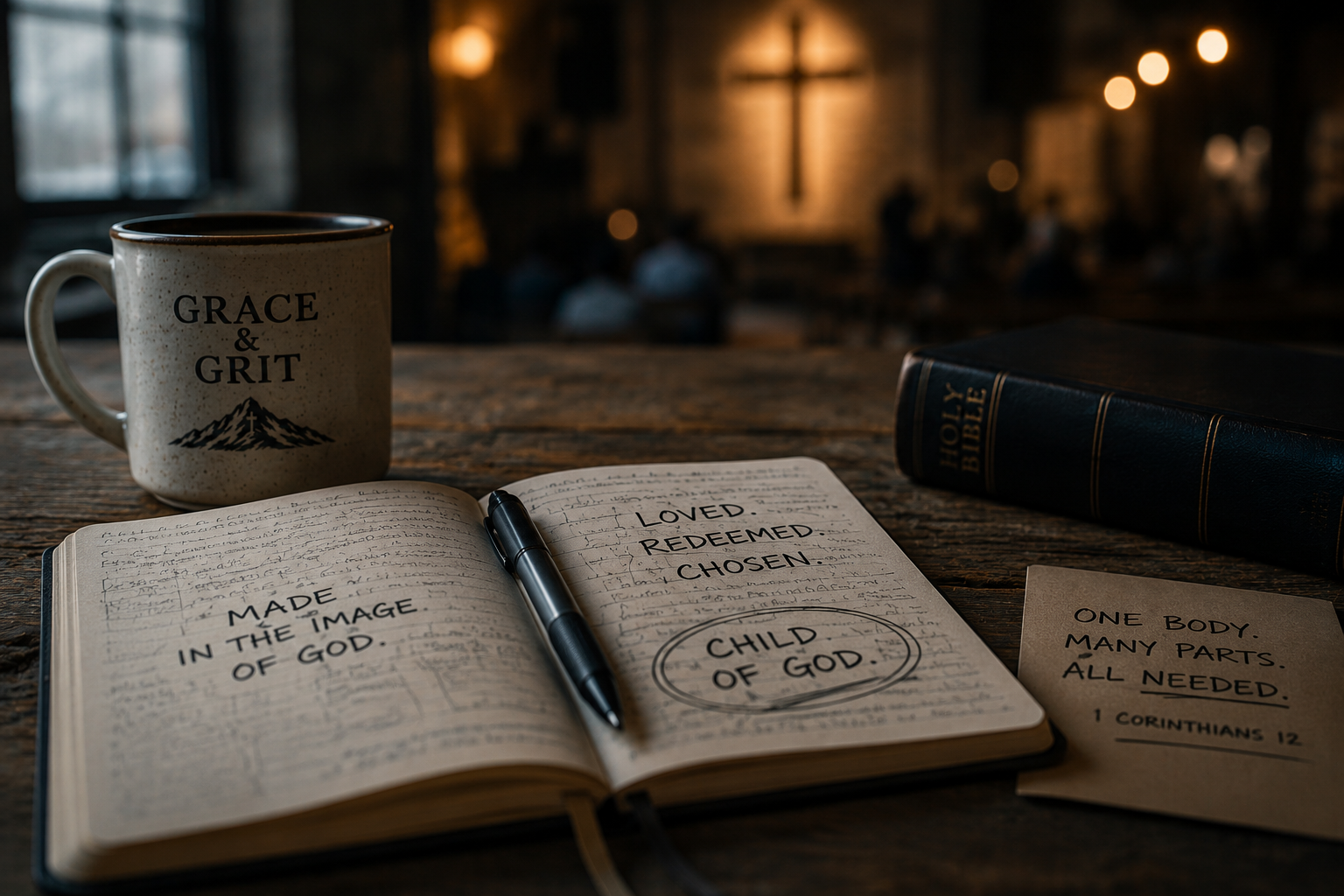
The church is described in 1 Corinthians 12 as a body made up of many parts — not every part looks or functions the same, but every part matters. Paul says the parts that seem weaker are indispensable. Difference is not a barrier to belonging in the body of Christ. Often, it is one of the ways God enriches His people.
Some of us notice things others miss. Some of us bring compassion because we know what pain feels like. Some of us bring honesty because we don’t have the energy for polished church nonsense. Some of us know what it means to keep trusting Jesus when getting through an ordinary week feels like climbing Everest in flip-flops.
So churches should intentionally look for ways to love, honour, include, and learn from those who struggle — not as a box-ticking exercise, not because culture demands it, but because this is what love does. Love notices invisible barriers. Love listens without becoming defensive. Love asks, Is there a better way to make room here?
Most churches are not trying to exclude people. Often they simply don’t know what they don’t know. Barriers get missed because they aren’t barriers for everyone. Rhythms and expectations can unintentionally be built around what feels normal to the majority. This isn’t about blame. It’s about growth. It’s about becoming more like Jesus together.
But this cuts both ways.
Those of us who are different also need grace — not only grace received, but grace given. Others may not understand straight away. They may not use the right words. They may forget something important to us. That doesn’t mean we excuse carelessness or ignore genuine harm. But it does mean we resist treating every misunderstanding as rejection, every mistake as malice, or every awkward attempt as failure. If we want others to see things from our perspective, we must be willing to see things from theirs.
Pain can make us protective. Repeated misunderstanding can make us defensive. And our culture actively encourages us to build identity around our labels.
One word often used here is intersectionality — the idea that our overlapping categories (disability, race, diagnosis, trauma, background) explain our experience of the world. There’s something Christians should be humble enough to hear in that. People’s experiences genuinely differ, and we shouldn’t slap a Bible verse over someone’s pain like a badly placed sticker on a cracked window.
But we must reject any thinking that says our labels are the deepest truth about us.
“Autistic” may explain something real about me, but it cannot tell me why I exist. “Disabled” may describe something true about someone’s body, but it cannot measure their dignity. “Traumatised” may name something devastating that happened, but it must never become someone’s truest name. Labels can describe. Labels can help. They can open doors to understanding and support. But no label can save.
Only Christ can do that.
Building identity on your particular struggle may feel validating — like finally having language for your experience, like being seen after years of being misunderstood. There can be real kindness in that. But it is not enough. It is too small a foundation for something as precious as your soul.
Your identity cannot ultimately rest on your diagnosis, disability, trauma, or difference. Not because those things are meaningless, but because they are not God. They did not make you. They did not die for you. They did not rise again for you. Only Jesus can redeem you, adopt you, and bind you in love to the body of Christ.
We are made by God and made in the image of God — which means every human being has innate value before they achieve anything, prove anything, or explain anything. And if we are in Christ, we are not merely image-bearers. We are adopted children of God: loved, chosen, redeemed, forgiven, and brought into His family.
Before I am neurodivergent, I am made in the image of God. Before I am ADHD or ASD, I am loved by God. Before I am anxious, exhausted, or overwhelmed, I am held by God. And if I belong to Jesus, then before every other label, I am a child of God.
The church is not held together by everyone having the same brain, body, or background — praise God, because that would be unbearable. It is held together by Christ: one Lord, one Saviour, one Spirit, one Father, one gospel, one body. Our differences don’t need to divide us. They can become places where grace grows, where we learn patience, humility, and love. But only when Christ remains central.
So my appeal is not mainly to “the church” as though the church is always someone else. My appeal is to those of us who feel different. Come to Christ again. Bring Him your diagnosis, your disability, your trauma, your exhaustion, the labels that have helped you make sense of yourself, and the labels others have used to wound you. But do not build your home there.
You are not, first and foremost, an autistic person — you are a child of God who may happen to be autistic. You are not, first and foremost, disabled — you are a son or daughter of the Most High God who may live with disability. That gives you dignity no diagnosis can give, value no ability can earn, and belonging no label can provide.
So to churches: love better, listen better, make room better, and don’t confuse this works for most people with this works for everyone.
But to those of us who are different: give grace, seek understanding both ways, and don’t let your struggle become your throne, your label become your lord, or your difference become the deepest thing about you.
The Christian answer to difference is not denial, defensiveness, or self-definition.
It is Christ. Not because our differences are nothing, but because He is everything. So my encouragement to believers of every kind is this…let’s do different, differently!